


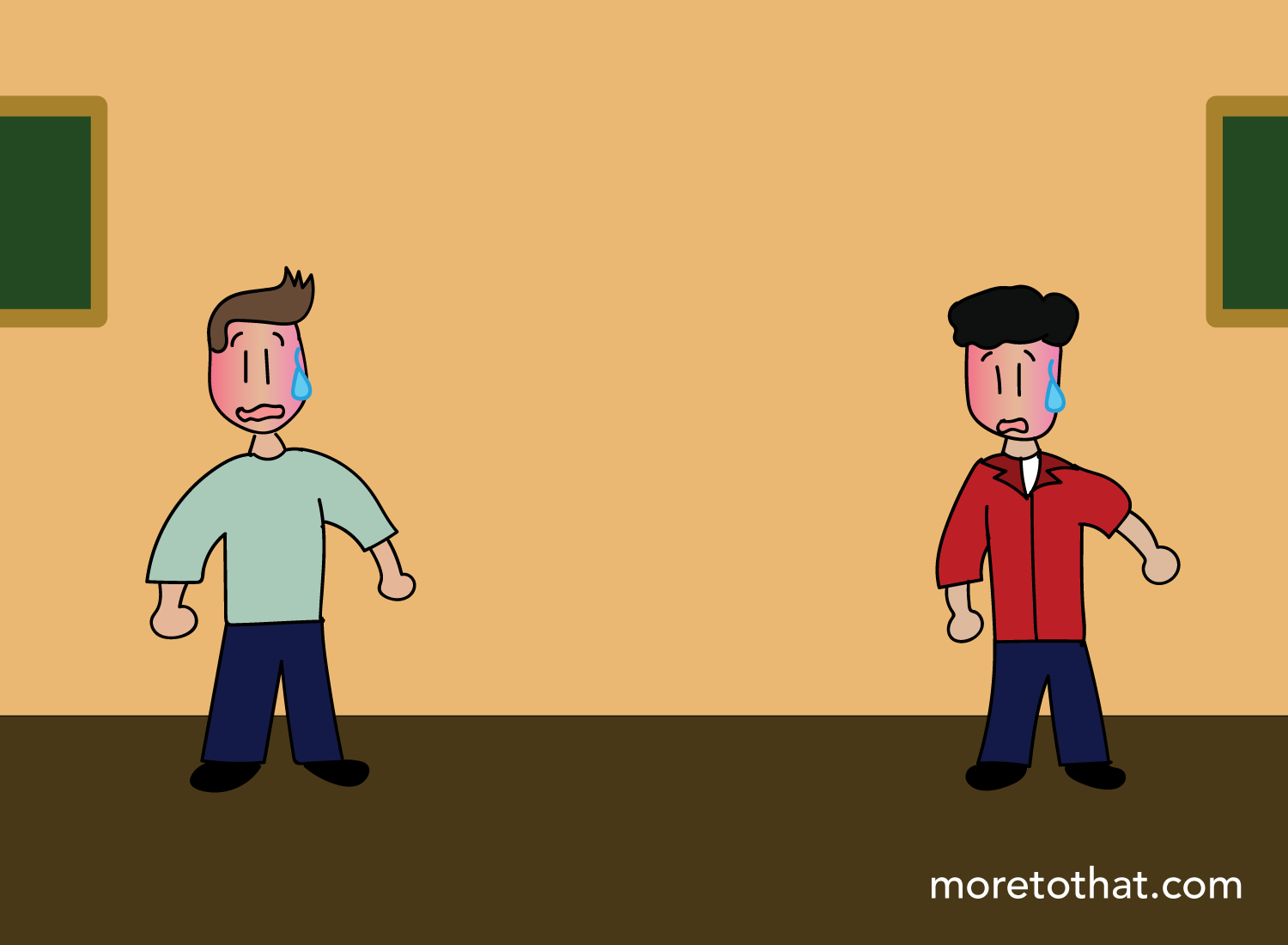
When you’re having a conversation with someone, we imagine it to look something like this:
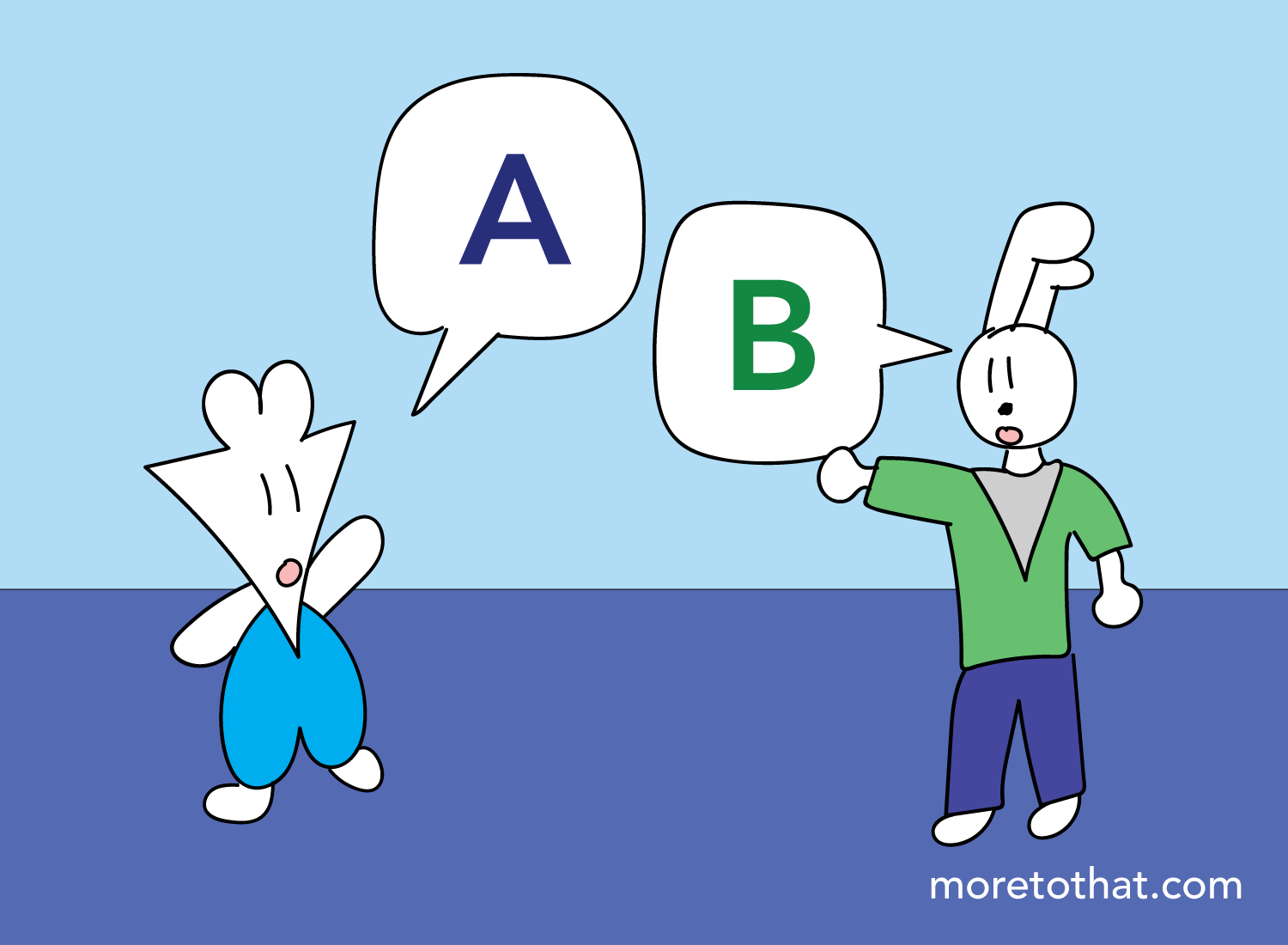
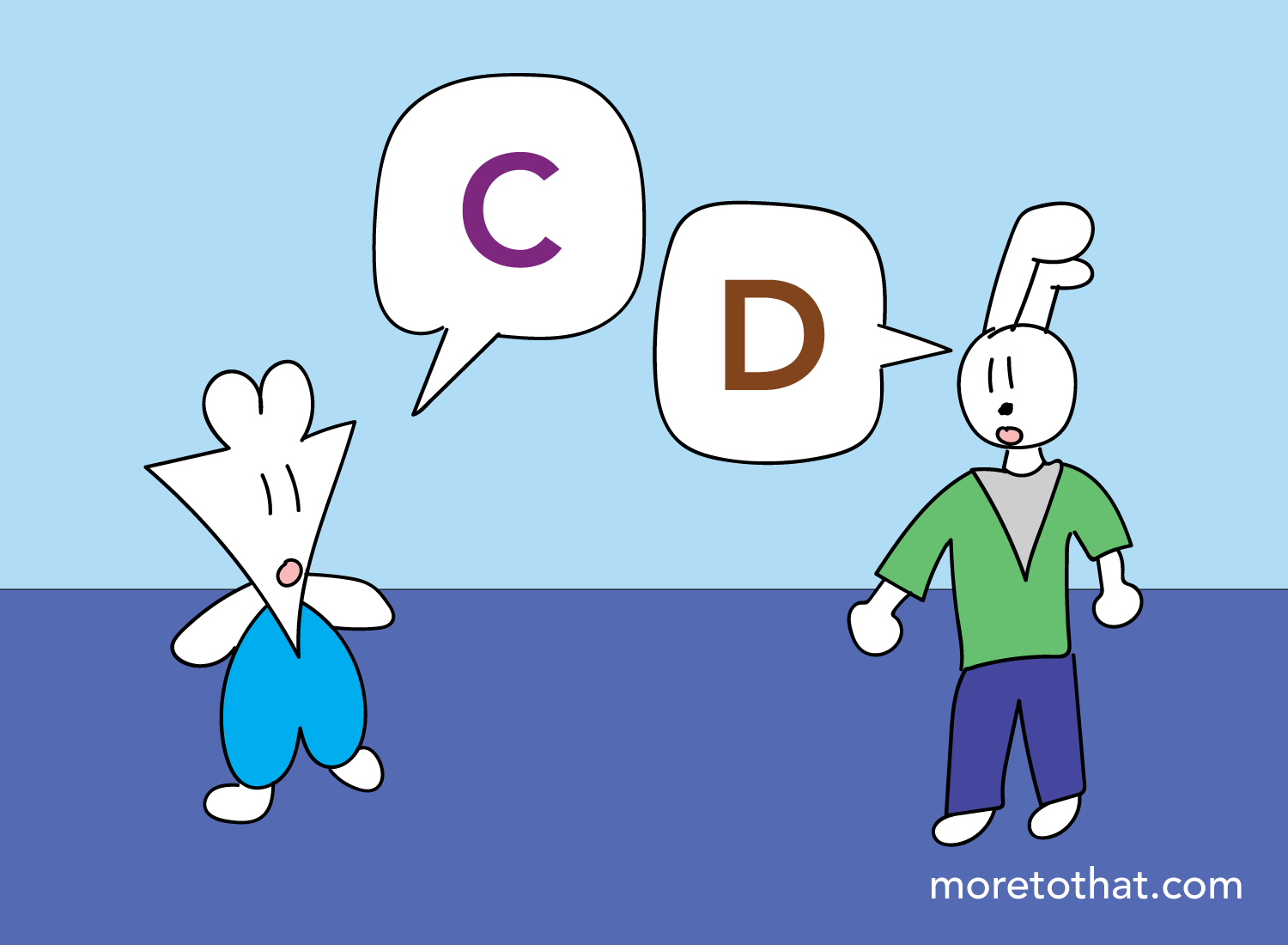
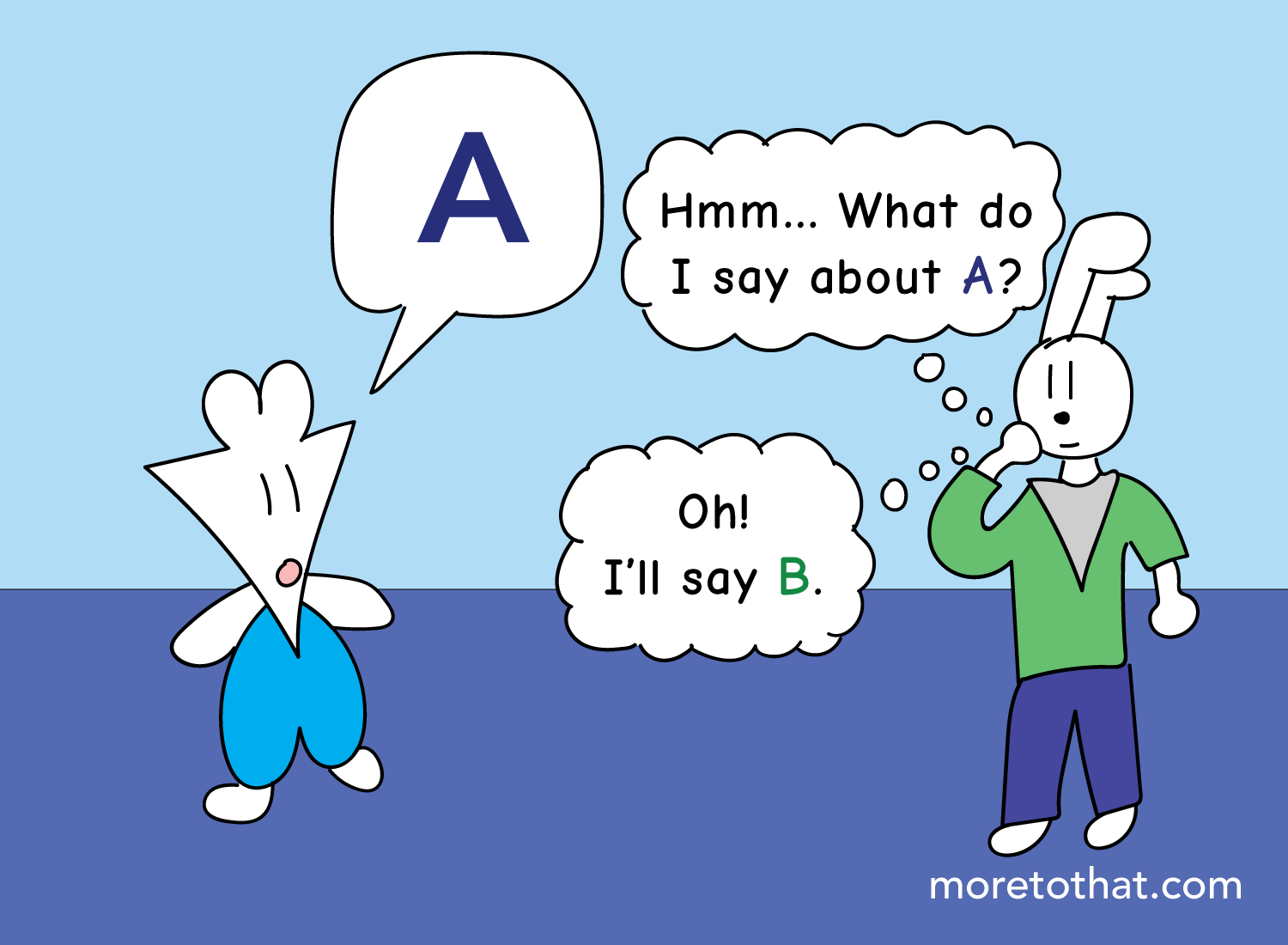
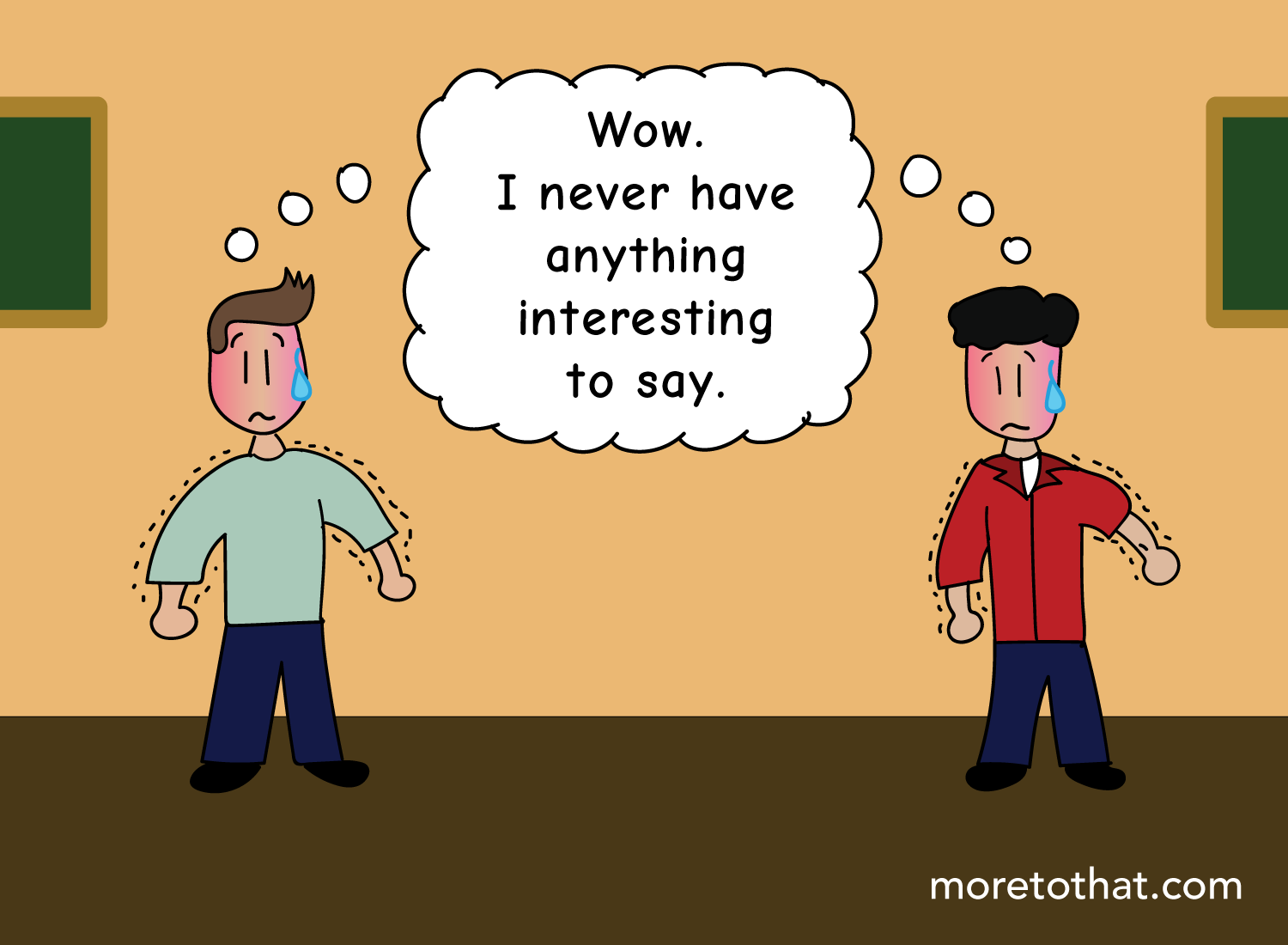
But in reality, this is what’s happening:
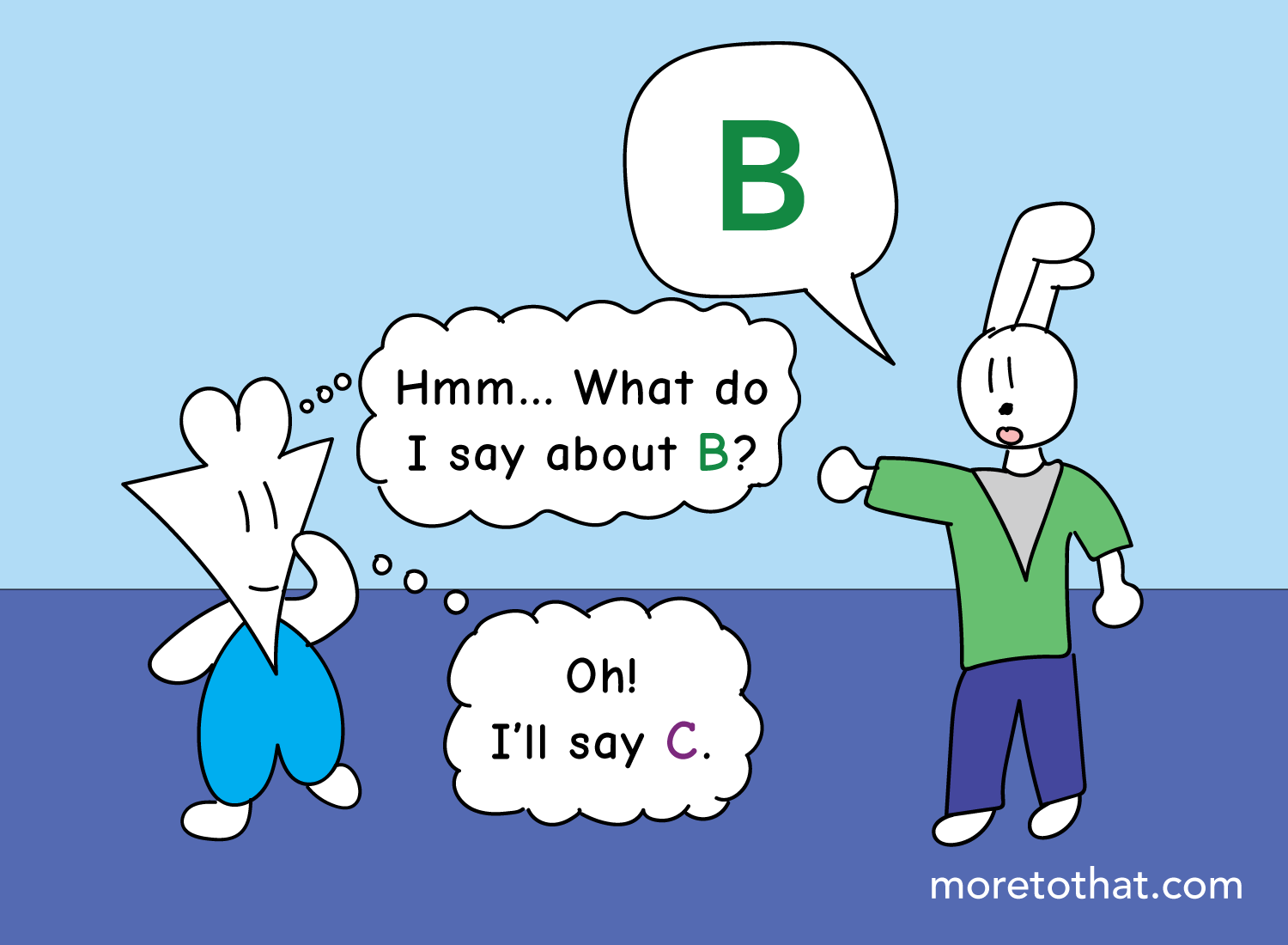
And so on.
We equate conversation with the words that are spoken, but much of the dialogue is actually happening in your own mind. When you listen to someone in this way, you’re scanning for the most compelling thing to respond to, knowing that your chance to speak will be coming up soon.
And once you’ve identified that interesting point, you begin to formulate your response to it, effectively tuning out whatever the person says after that.
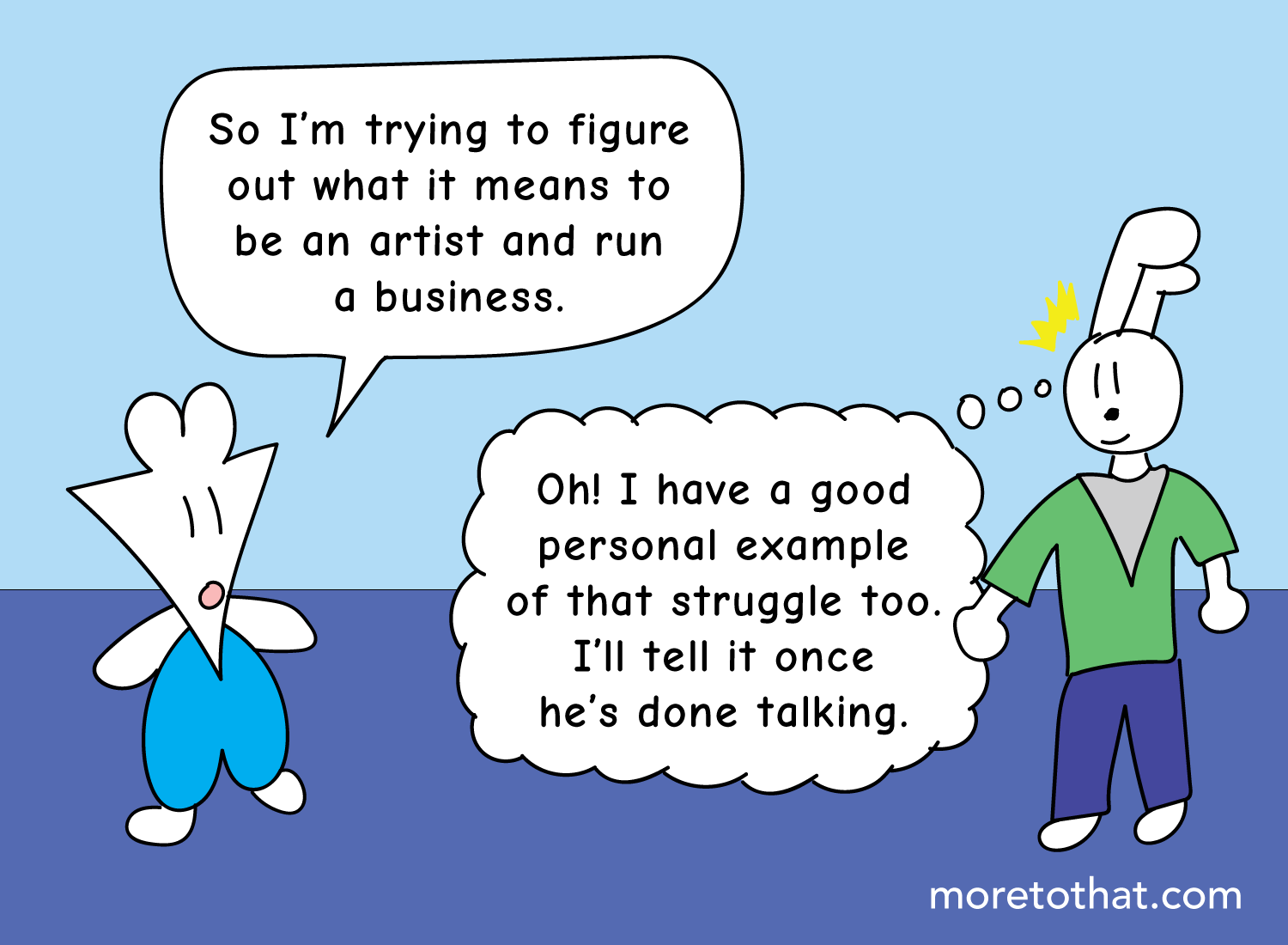
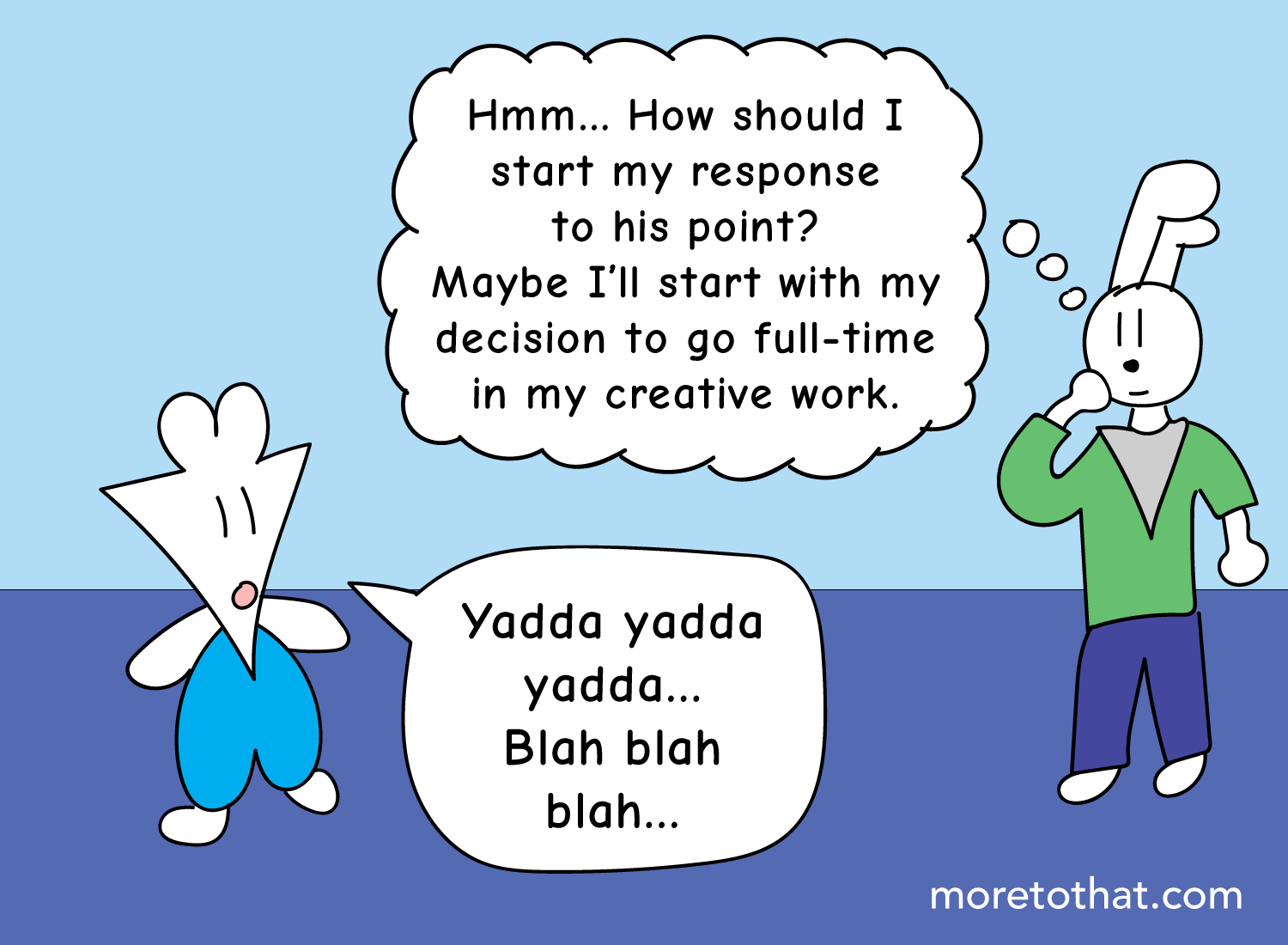




This is what I call Impulsive Listening, where your desire to listen is driven by the impulse to reply. It’s when the volume of your own thoughts is louder than the words that may be spoken by the other, which puts you at the center of the conversation the whole way through.
Impulsive Listening is what causes anxiety throughout any given conversation. When you’re so focused on what you’re going to say next, you feel like the spotlight is always on you, regardless of who’s talking. You’re often processing the person’s current point while formulating your reply to their previous point, and this deluge of thought nullifies your ability to be present.
So the key is to tame this impulse to reply. But how do we go about doing that? After all, isn’t the very nature of conversation to respond to what another person has said? Isn’t the game of ping-pong the most apt way to describe the flow of a good conversation?

There is truth to this analogy, but one thing that’s worth asking is the following:
What makes a great conversation?
If you sit with this question long enough, you’ll find that it’s not necessarily the back-and-forth nature of a conversation that makes it great. It’s not the sustained rally of point-after-point that makes it compelling.
Rather, what makes a conversation feel worthwhile is if it expanded your mind. It’s when you learned something interesting, felt something deep, or laughed heartily throughout. In other words, a great conversation materializes when you give yourself the space to receive what the other has said, and your reaction happens then and there. You’re not mentally bookmarking a statement to address for later, and you’re not trying to craft an intelligible remark to sound smart.
We may understand this in theory, but it’s difficult to put into practice because we find silence discomforting. One of the immediate triggers of social anxiety is the “awkward silence,” and our desire to avoid it is perhaps the leading cause of Impulsive Listening. We desperately want to have a response ready so that we don’t have to deal with the elevated heart rate that can accompany the absence of sound.
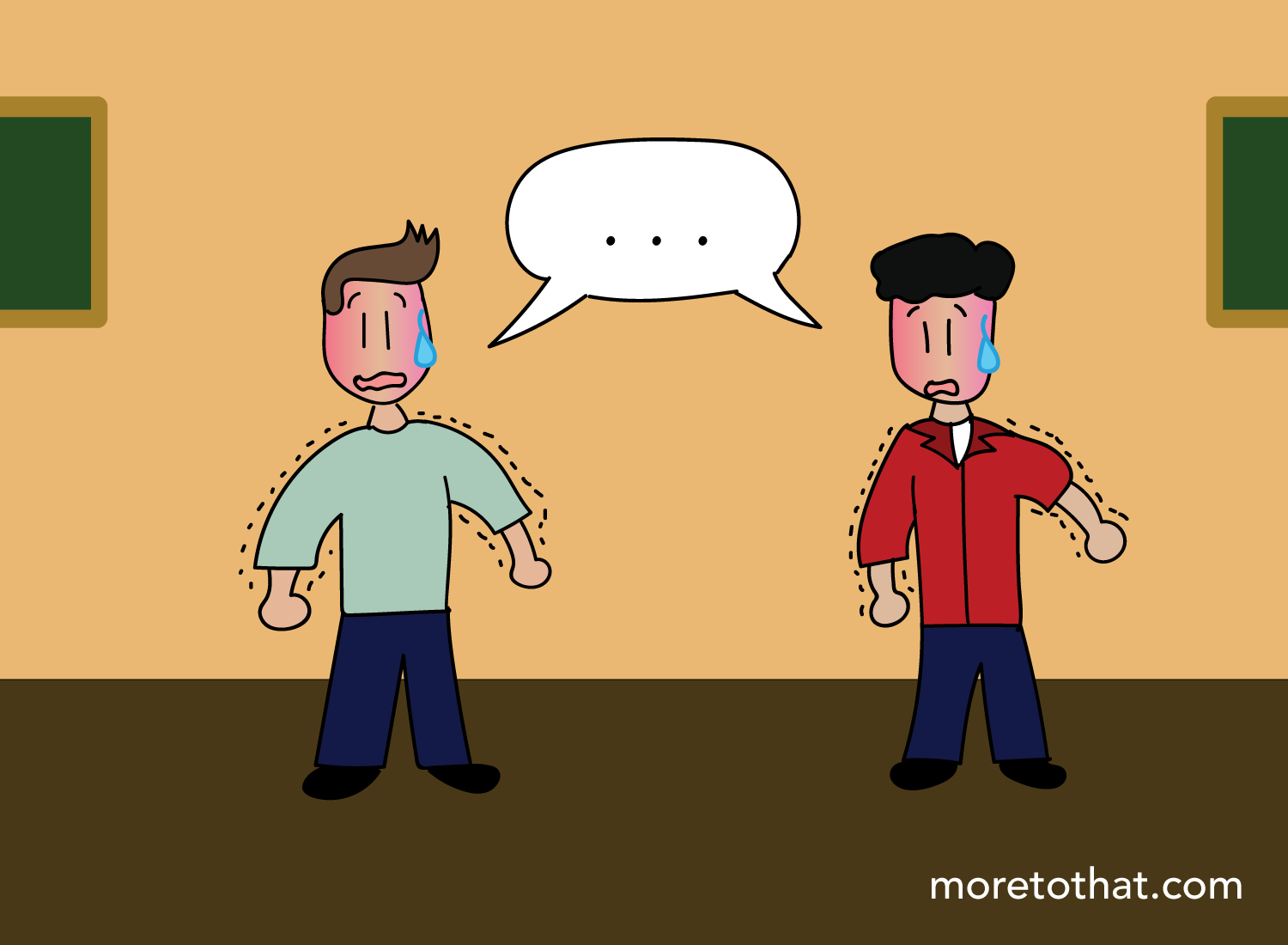
But another thing worth asking is the following:
What makes silence uncomfortable?
Well, the first thing you’ll realize when you sit with this question is that it depends on context. Silence on a meditation retreat isn’t just a requisite, it’s desired. The same goes for when you take a walk in nature. By giving yourself the space to still your mind, you allow clarity to seep in, one light ray at a time.

Expectations shift, however, when you’re in a social setting.
When you seek clarity within the scope of a conversation, you don’t expect it to be found in the absence of words. Rather, you look for them within the arrangement of the words themselves. It’s through the stream of dialogue that you expect clarity to flow its way through you.
And because we place so much value on what is spoken, we judge the value of our contribution by the words we speak. The question of self-worth is at the center of all this, even if it’s subtle. If you have nothing to say in a conversation, you feel tense because a narrative of disapproval starts filling your mind.
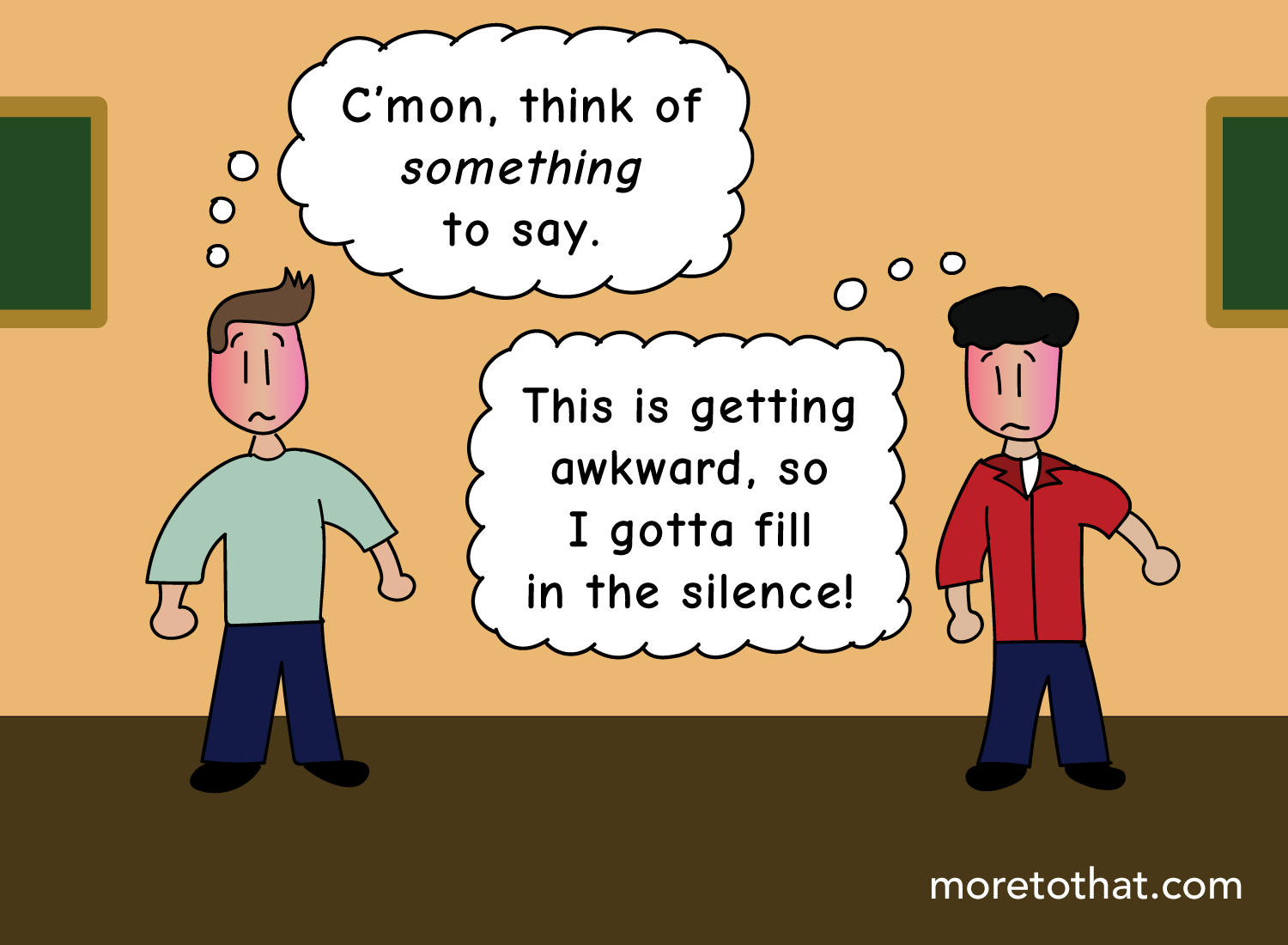
Anxiety is most noticeable in the person that can’t allow silence to persist. Even a second of silence can be unbearable to some, and they’ll need to say something to alleviate the discomfort that may be arising in their mind and body. For this person, real listening is an impossibility.
In order to truly listen, we need to reframe our interpretation of silence. Instead of viewing it as a marker of a flat conversation, we need to see it as a signal of a point that is being internalized. As a way of communicating that you were truly listening to their point, which is why you now need a moment to process and formulate a response.
But of course, it’s nuanced.
When you’re meeting someone for the first time (or when you don’t know the other person that well), silence will likely have the opposite effect. Oftentimes, the other person may interpret your silence as an indicator that you weren’t listening to what they were saying. That’s because when you don’t know someone well, you’re reliant upon dialogue to make up for that gap in shared experience. And when the dialogue isn’t flowing back-and-forth, it feels like there’s not much in common between you after all.
That’s why anxiety tends to be higher when you’re with people you don’t know. The words you speak hold more weight, and the absence of them makes you feel like you’re dropping the ball on this interaction. Given this dynamic, it’s hard to truly listen to what the other is saying, and to override the impulse to latch onto a statement and formulate a response right away.
In these situations, it’s important to ease into the silence. You want to be fully present and listen to everything they’re saying, but to also let them know that you’re processing things shortly afterward. That way your silence isn’t misinterpreted as indifference.
One way I do this is to simply let the other person know that I need a moment to think through what was said. I could either be explicit about it:
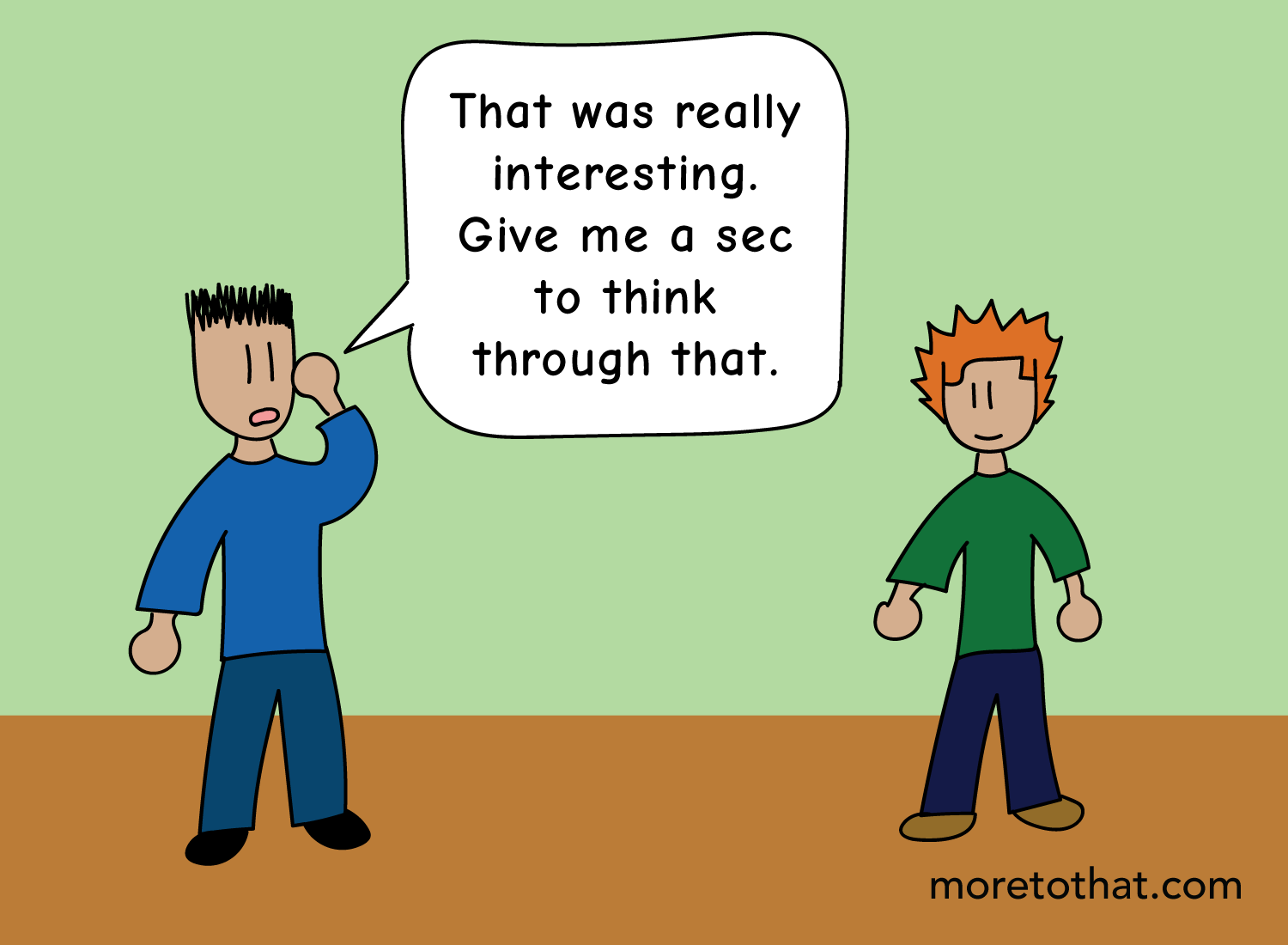
Or I could be brief to signal that I need a moment:

It’s remarkable how something so simple changes the texture of silence. By prefacing that you need a moment, you’re indicating that (1) you were really listening, and that (2) this silent period shouldn’t be awkward. This makes the silence feel welcome, and opens up the breathing room required to process the dialogue in a mindful manner.
All right. So what about people you do know well? How can you ensure that you’re listening to them with full presence of mind?
What I find most interesting about close relationships is how we tend to take them for granted. That the more comfortable you are with someone, the more permission you give yourself to put your brain on auto-pilot and tune out at any given moment.
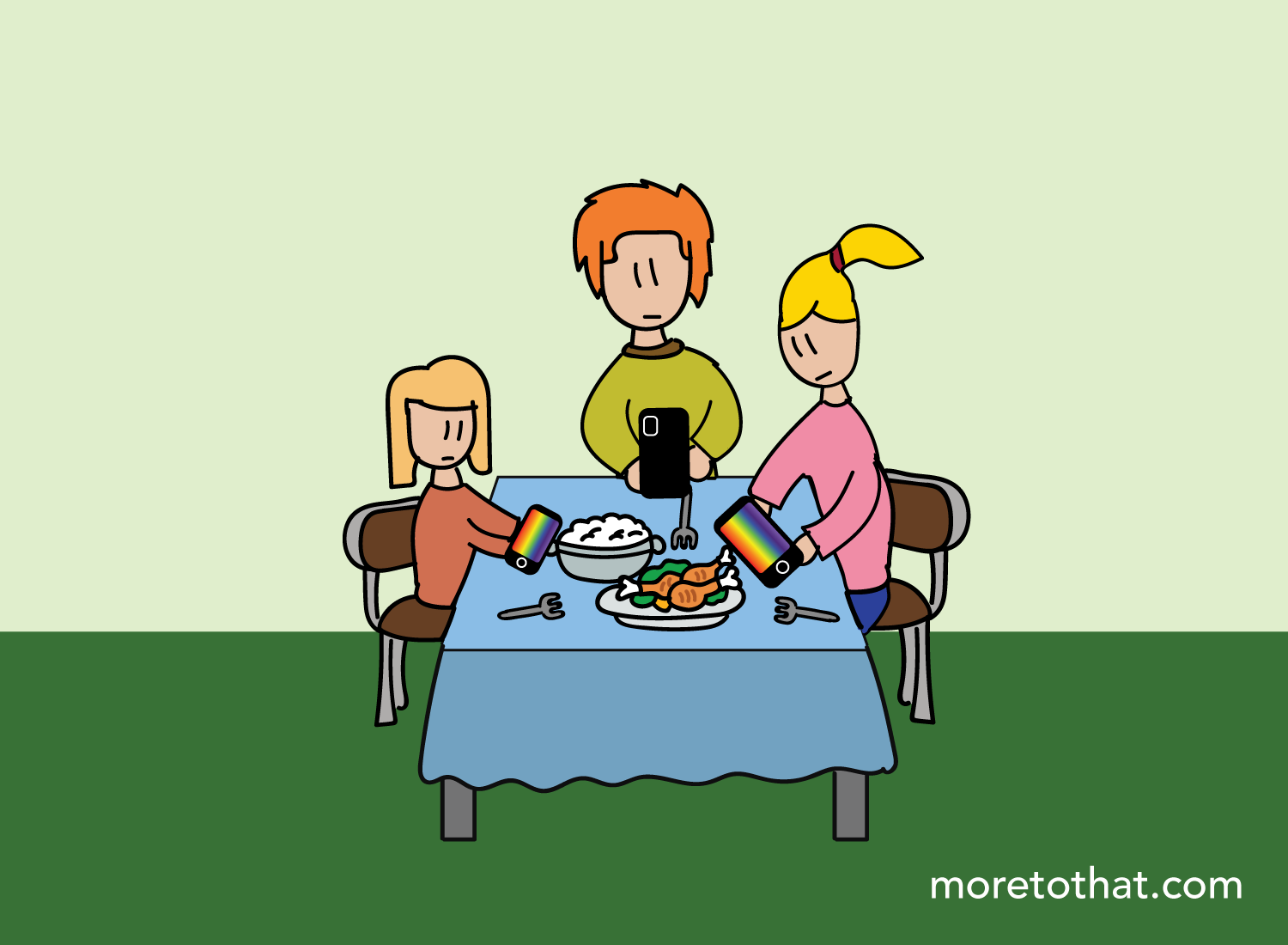
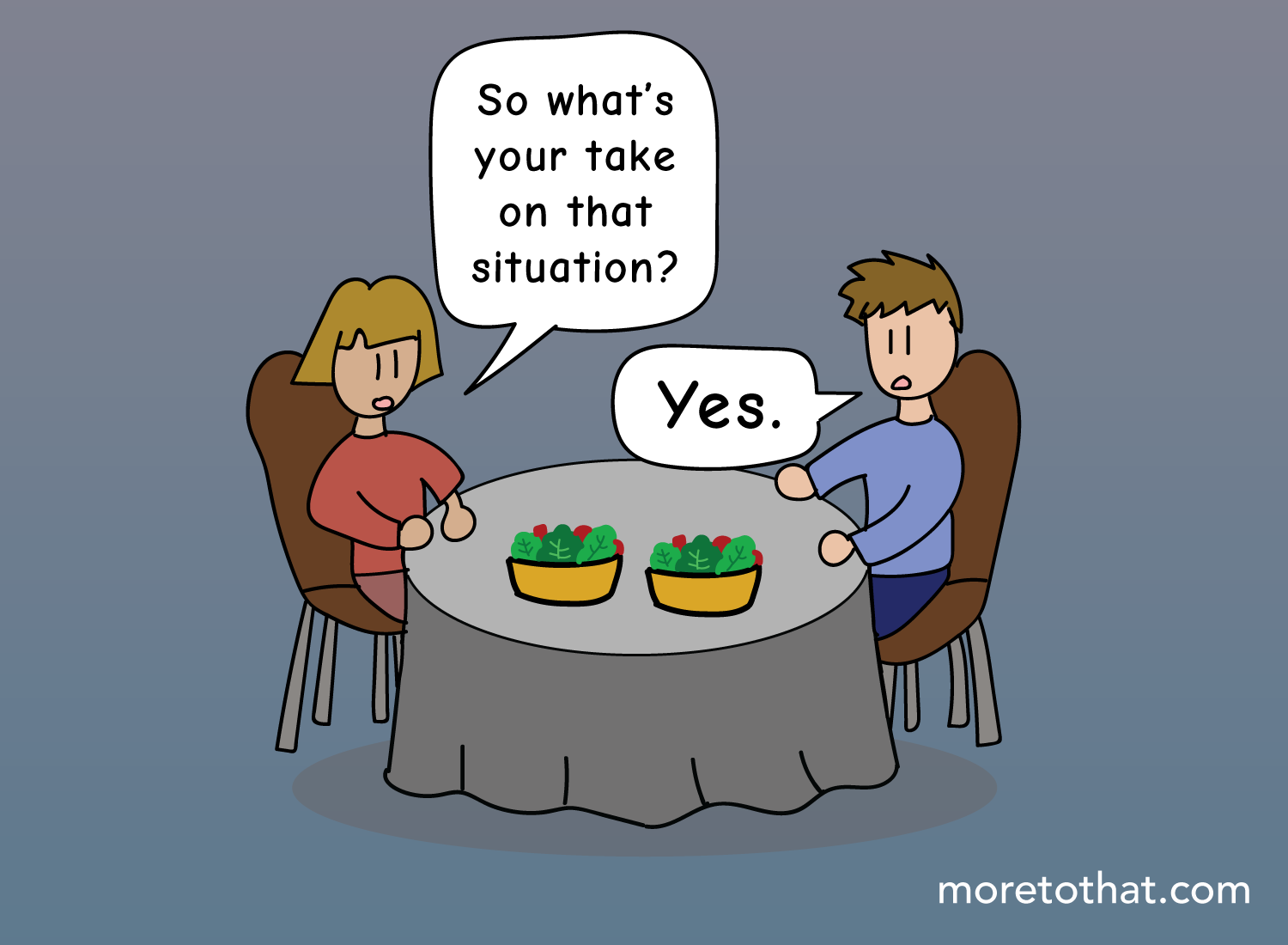
Think of the quintessential image of a family having dinner at a restaurant, where everyone is on their phones:
Or how it becomes okay to zone out during a conversation you’re having with your partner:
And so on.
Things that we’d never do when we meet someone for the first time become commonplace for the people we see all the time. I get it though. In one sense, that’s why close relationships are so precious. You can let your guard down and occupy a rare space where mannerisms and norms don’t govern it.
But on the other hand, it’s easy to get complacent and miss every opportunity to get to know one another better. Just because you know someone well doesn’t mean that you’ve uncovered everything there is to know. Every human being possesses an incredibly nuanced and fascinating mind, and even if you’ve known one another for decades, there is always more terrain to cover.
So when it comes to the people you know well, the art of listening is to reinvigorate your interest in learning more about them. To not take the silence for granted, and to view it as an indicator for you to ask questions and to allow dialogue to take center stage once again.
For example, I’ve known my wife for close to a decade now. We’ve shared thousands of meals together, and I’m not going to sit here and tell you that each one was full of mind-blowing dialogue that uncovered some core element of who we are. There were plenty of unremarkable meals where we just watched TV together or sat in silence while we were thinking our own thoughts.
But there have also been many, many meals where we asked each other a bunch of questions, spoke about our greatest fears, and celebrated our small triumphs. With each of these conversations, we learned a bit more about one another, and understood that one life contains multitudes. Neither me nor my wife are the same person we were 10 years ago, and it’s only through consistent dialogue where we realize how much our worldviews have changed, and how we’re attempting to align ours together over time.

The art of listening isn’t just about taking in what the other person is saying. It’s also about reassuring the other person that you haven’t extinguished the flame of curiosity when it comes to your bond. That you’re not going to be complacent. That you’re not going to be okay with treating silence as a given, despite the privilege you have of being comfortable with it.
Listening is the silencing of the mind, but it’s also being aware of when it’s time to speak again. It’s about listening without the desire to respond, but giving space to process those words so you can respond in a thoughtful manner.
Ultimately, to listen is to be compassionate. And when conversation becomes a vehicle for kindness, you will notice just how powerful each one can be.
Even in reading this piece I notice how the conversation happening in my mind is distracting me from your words (which deserve my full attention). Thanks for sharing this!
Thanks for sharing Lawrence! I am thinking about how silence relates to self worth for me